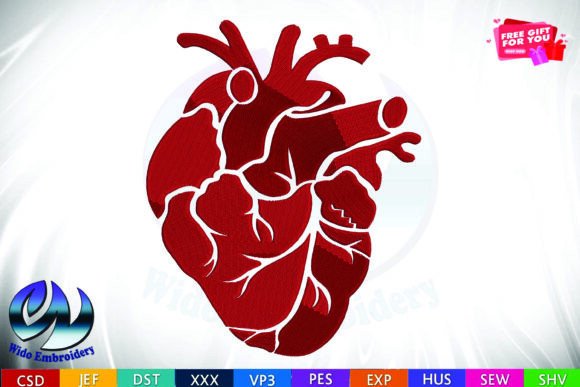
Anatomical Heart Embroidery Design Review
As an embroidery designer who has spent years digitizing files for small businesses, I approach every new machine embroidery design with a critical eye. It is not just about whether the image looks pretty on a screen; it is about how it translates to fabric, how it holds up in the wash, and most importantly, how it serves the brand identity of the client. Recently, I evaluated the Anatomical Heart Embroidery Design, a digital asset marketed for medical professionals but possessing a versatility that extends far beyond scrubs. This review breaks down its potential for small business merchandise, branded patches, and custom apparel.
First Impressions: Professionalism Meets Organic Detail
The first thing you notice about the Anatomical Heart Embroidery Design is its balance between anatomical accuracy and stylized elegance. Unlike cartoonish hearts often found in generic clip art, this design carries a sense of premium craftsmanship. It feels professional yet organic, making it suitable for brands that want to convey care, life, vitality, or precision. For a boutique owner or a creative studio, this aesthetic bridges the gap between clinical professionalism and handmade warmth.
The description notes that this is an applique style logo, which is a significant advantage for production efficiency. Applique designs generally use less thread and reduce puckering, a common issue in dense embroidery. This makes the Anatomical Heart Embroidery Design a strong candidate for items where fabric drape and comfort are priorities, such as t-shirts and lightweight tote bags.
Real-World Applications for Small Business Merch
When considering how to integrate this design into your product line, think beyond the obvious medical context. While it is explicitly described for medical use, the visual language of an anatomical heart resonates with various industries. Here is how I envision this digital embroidery file performing in real business scenarios:
- Branded Patches: The design’s clear outlines make it ideal for embroidered patches. These can be sewn onto denim jackets, canvas backpacks, or work bags, adding a tactile element to your small business merch.
- Staff Uniforms and Aprons: For cafes, florists, or artisanal bakeries, placing this design on the chest pocket of an apron creates a subtle yet distinctive brand mark. It suggests a "heart for the craft" without being overly literal.
- Cap Embroidery: With five sizes included, you can select the smallest iteration for cap fronts. However, caution is needed here regarding stitch density on curved surfaces, which I will address later.
- Tote Bag Design: As a central focal point on a canvas tote, the applique technique ensures the bag remains flexible and usable, enhancing the perceived value of the handmade product.
- Quilt Blocks and Home Decor: The description mentions quilt blocks, which is a brilliant niche application. Quilters often look for unique motifs, and an anatomical heart offers a modern twist on traditional floral patterns.
Navigating Technical Challenges in Production
While the Anatomical Heart Embroidery Design is versatile, successful execution requires attention to technical details. Not all fabrics behave the same way, and not all hoop sizes are created equal. Since the product comes in 5 sizes and 10 formats, you have flexibility, but you must match the size to the item.
One major consideration is stitch density. Even with applique, the satin stitches outlining the heart must be tight enough to cover the fabric edge but not so dense that they cause puckering. When stitching on textured fabric like terrycloth towels or thick denim, you may need to adjust your underlay settings. Always test on a scrap piece of the actual material you intend to use for the finished product.
Another critical factor is the choice of stabilizer. For stretchy materials like jersey t-shirts, a cut-away stabilizer is non-negotiable to prevent distortion over time. For woven fabrics like canvas tote bags or uniform shirts, a tear-away might suffice, but I recommend a light cut-away for durability if the item will undergo frequent washing. This is especially important for commercial embroidery projects where longevity reflects on your brand’s quality.
Impact on Brand Identity and Customer Trust
In the world of Etsy selling and boutique retail, visual consistency is key. Using a high-quality embroidery file like this one helps establish a cohesive brand identity. When customers see a well-executed anatomical heart on a mug wrap, a patch, or a shirt, they perceive attention to detail. This perception builds trust.
For medical professionals, the design reinforces expertise and care. For creative entrepreneurs, it signals a blend of science and art, or simply a deep passion for their work. By incorporating this design into your design assets, you elevate simple merchandise into meaningful branded goods. A plain tote bag becomes a statement piece; a standard work shirt becomes a uniform with personality.
Practical Designer Notes for Implementation
Before you commit to a large production run, follow these steps to ensure the Anatomical Heart Embroidery Design meets your standards:
- Test in Black and White First: Remove color from the equation to check the clarity of the lines. If the design loses definition in monochrome, it may rely too heavily on color contrast, which could be problematic for single-color branding.
- Check Small Patch Viability: Use the smallest provided size to stitch a test patch. Ensure that fine details do not merge together. If the arteries or veins become indistinguishable blobs, the design may be too complex for very small applications.
- Review Thread Color Contrast: Choose thread colors that stand out against your fabric. For dark uniforms, consider using metallic or bright threads to make the heart pop. For light fabrics, deep reds or burgundies offer a classic, elegant look.
- Confirm Hoop Size Compatibility: Verify that the largest size of the design fits within your machine’s maximum hoop area. Do not assume; measure the actual dimensions provided in the file documentation.
- Create a Printable Mockup: Before stitching, place the design digitally on photos of your products. This helps visualize scale and placement, saving time and materials during the prototyping phase.
- Verify Commercial Licensing: The description states you must have an embroidery machine, but it does not explicitly detail the license terms for mass production. Always confirm with the seller that the digital embroidery file includes rights for commercial use, especially if you plan to sell items featuring this design.
Final Verdict for Work and Embroidery Projects
The Anatomical Heart Embroidery Design is a robust addition to any designer’s library. Its applicability spans from strict medical branding to eclectic handmade goods. By understanding the nuances of applique stitching, stabilizer selection, and fabric texture, you can leverage this design to create high-value custom apparel and accessories. Whether you are decorating caps for a local clinic or creating unique gifts for a boutique shop, this design offers the professional finish that discerning customers expect. Remember, the quality of your embroidered patch or garment directly reflects your brand, so take the time to test and refine your process. With the right preparation, this anatomical motif can become a signature element of your Work in Embroidery.